I am a physician — PharmD, MD, FACC — with a career spanning clinical cardiology, pharmacy, and medical leadership in managed care, where I serve as a medical director and direct physician education programs. Medicine taught me to read faint signals carefully and to trust the discipline of method.
Astronomy is where that discipline goes at night. From my backyard observatory I run multiple imaging rigs on deep-sky targets, accumulating exposures across weeks — thirty, forty, fifty hours per object — and processing them into images that try to honor what the photons actually reported.
And because pictures alone weren't enough: I went back to school. I am currently a freshman at Arizona State University, studying astronomy and physics — yes, a cardiologist with two doctorates sitting in first-year physics, and delighted about it. The degree is the long road to the science beneath the images: photometry, spectroscopy, variable stars.
The rest of the ledger: University of Michigan alumnus (MBA), Louisville native (Go Cards — and Flaget Braves!), CERT volunteer, bourbon enthusiast, cyclist, and grandfather — the walls of my grandchildren's rooms are this observatory's most important gallery.
A working backyard observatory on a Florida lakefront — Bortle 4 skies, confirmed by sky-quality meter, shared amicably with the lake's original residents. Multiple rigs run in parallel on long-integration deep-sky projects.
518 mm f/4.8 refractor with cooled one-shot-color CMOS camera, harmonic-drive mount, and automated control — the workhorse for narrowband nebula projects.
Smart telescope running an autonomous Messier survey — a minimum of six hours of integration on every object in the catalog. 50 of 110 complete and counting.
Narrowband (SHO) and broadband imaging, calibrated and integrated in PixInsight. In development: slit-less spectroscopy and variable-star photometry for citizen science.
Four decades in medicine — bedside, pharmacy, boardroom — leaves a physician with things worth saying. This is where I'll say them: reflections and commiserations on medicine past, present, and future, written for colleagues, patients, and anyone curious about what the practice looks like from the inside. Pull up a chair; the coffee is terrible, as tradition requires.
Where we came from — the mentors, the training, the bedside habits worth keeping, and the hard-won lessons a career in cardiology and pharmacy leaves behind.
Where we stand — the view from inside managed care and medical education: what serves patients, what doesn't, and the honest state of the physician's craft today.
Where we're headed — the next generation of physicians, the systems they'll inherit, and what medicine must hold onto no matter what technology arrives.
Each entry below is weeks of clear-night work — hundreds of individual exposures, gathered a few minutes at a time and integrated into a single deep image. Logged the way they were planned: by designation, hours, and method.
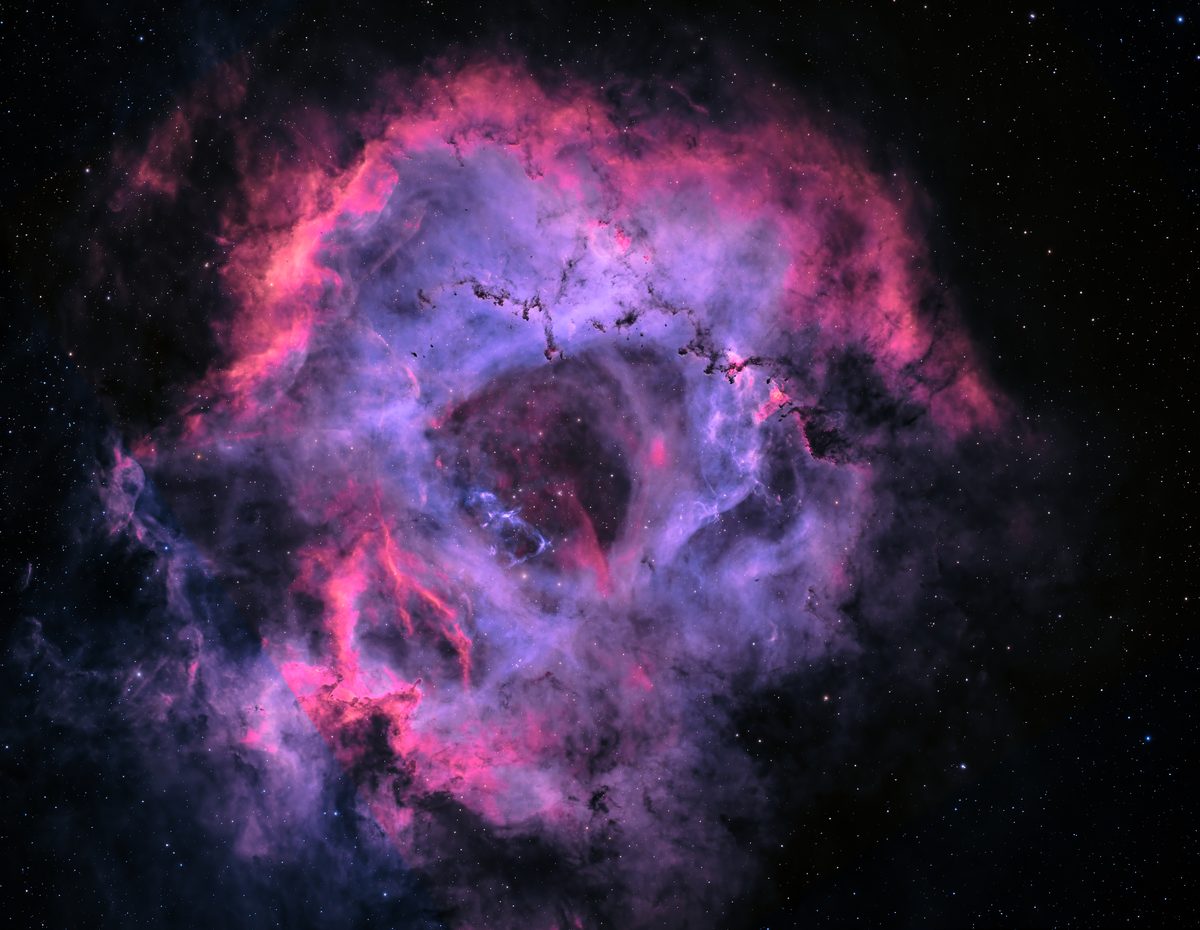
A stellar nursery 5,200 light-years away in Monoceros — newborn stars carving a hollow in the cloud that formed them. Competing in the national ALCON 2026 imaging contest.
A continent of glowing hydrogen in Cygnus. The current flagship project: a deep narrowband campaign with an unusually heavy investment in the faint oxygen signal most images miss.
A grand-design spiral seen face-on, 21 million light-years away — its arms resolved through roughly fifty hours of patient broadband exposure across two rigs.
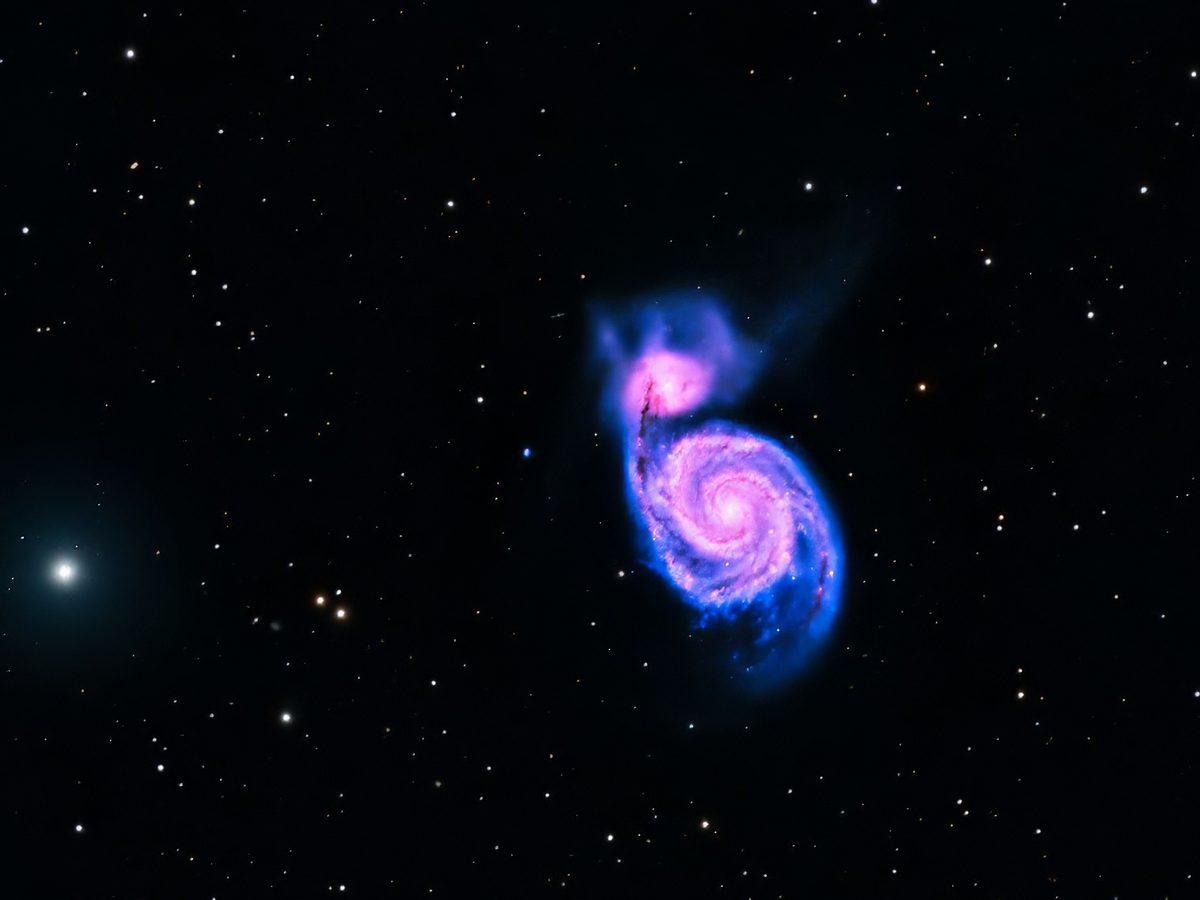
Two galaxies caught mid-encounter, trading stars across a bridge of gas. A dual-dataset project blending broadband and narrowband exposures.
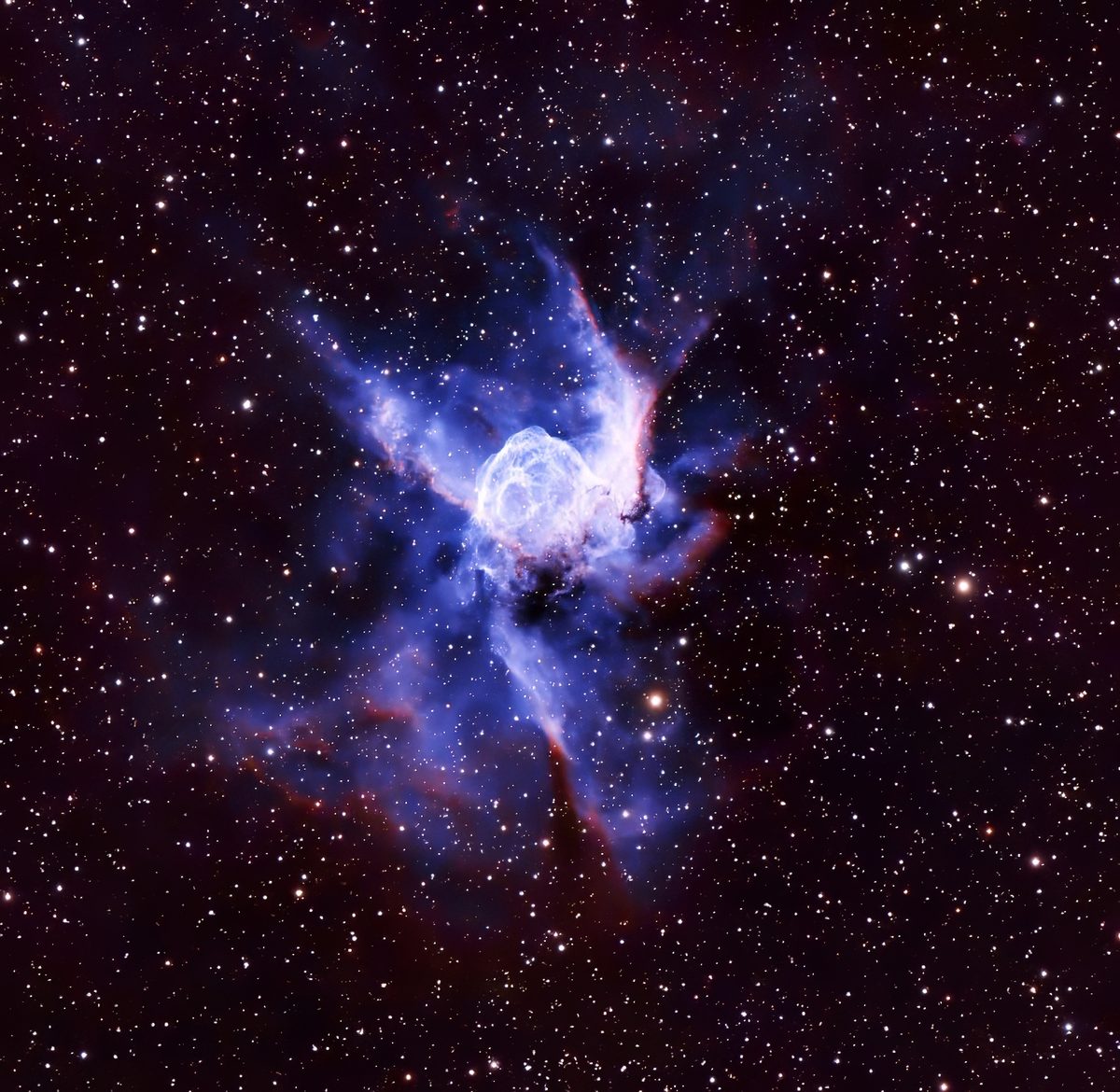
A bubble blown by a dying Wolf-Rayet star — one of the sky's great violent objects, rendered in narrowband. A deeper reprocess is underway.
A luminous star-forming region in Sagittarius, gathered across a full season in two filtered datasets before its seasonal retirement.
Classifying galaxies in early data from the Vera C. Rubin Observatory through the Zooniverse platform — among the first public classifiers working the opening releases of the largest sky survey ever undertaken.
An autonomous survey of the complete Messier catalog from AVO — a minimum of six hours of integration on every object. 50 of 110 complete and counting.
Light-curve photometry of eclipsing binaries, beginning with an Algol campaign in fall 2026 — measured in AstroImageJ, contributing observations to the American Association of Variable Star Observers.
First-light program with a Star Analyser 100 diffraction grating — beginning with Vega as the calibration standard, working toward stellar classification by spectrum from the backyard.
Guest lecture for CERT (Community Emergency Response Team) training, with a full supplemental curriculum — how people actually think, decide, and endure in crisis, from a physician's perspective.
Director of a medical-resident education program in pharmacy benefit management — curriculum design, capstone casework, and mentoring at the intersection of clinical medicine and health systems.
From the Harvard Computers to the modern era — Leavitt, Cannon, Payne-Gaposchkin, Rubin, Bell Burnell, and the tool that unlocked the scale of the universe, built by a woman who never got to see what it unlocked.
Monthly deep-sky features for the local community, building toward a public exhibition of the observatory's work — the images, the process, and the night sky over Florida.